

Over the past decade, the use of social media platforms has risen tremendously. In 2020, over 3.6 billion people used social media, and it is expected to rise to 4.41 billion by 2025. (source: Statista)
People are using social media for more than communication. More and more people are using social platforms to find new brands, research reviews, and make purchasing decisions.
If you think social media is only for B2C brands, then think again. If your B2B brand is not on any platform and doesn’t have a social media strategy, you are missing out on opportunities to capture your audience’s attention.
Social media marketing should be approached strategically with a defined plan. Let’s get started on how you can create a B2B social media marketing strategy on this blog.
Social Media Marketing Strategy Steps
1. Documenting Your Social Media Strategy
Almost 80% of marketers said they have a social media strategy for their brands, but only 32% have documented their B2B social media marketing strategy.
Documenting a social media advertising marketing strategy is vital for your business as it provides a roadmap for how the b2b companies will proceed with social media.
If you are posting random content and not measuring the results, you won’t be able to track if you are reaching a proper audience, achieving your KPI’s, or spending money on effective campaigns.
There are hundreds of metrics that can help you see the ROI, but not all are important.
2. Set Your Marketing Goals
Goal setting is the first step of every social media marketing strategy for business leaders. Marketers who know their goals and objectives help their team to know what exactly they are working towards.
Note: Marketing objectives are the goals you want to achieve during a certain period of time.
Here are some tips on how to set your marketing goals to help your business:
- Set how much revenue you want to generate from your inbound marketing efforts.
- Determine how many sales you need to hit that goal.
- Identify how many SQLs(sales-qualified leads) you need.
- Set how many MQLs(marketing qualified leads) you should get.
- Identify how much traffic you should achieve for your goal.
3. Tracking KPIs
KPI stands for key performance indicator tracking which is one of the most important social media marketing strategies. It means monitoring your relevant key factors to increase your marketing success. By selecting the right KPIs and measuring them regularly, you can boost productivity and decrease costs.
KPI’s aka Key performance indicators provide insights into whether the social media marketing campaign is working or not. The KPI should follow a SMART framework.
- S- Specific
- M- Measurable
- A- Achievable
- R- Relevant
- T- Time-bound
For example, you should increase your LinkedIn engagement. Your KPI might be: ‘‘Increase LinkedIn engagement (connections, messages, leads) by 50% in the next 30 days.’’ You can also use LinkedIn scraper tools.
4. Select The Right Social Media Platforms For Marketing
With more social media platforms than ever before, it’s not possible for marketers to operate multiple accounts on every social network. Instead of creating accounts on different platforms, find the ones that most of your target audience are active in and spend your time managing them. The general rule for choosing the right social media platform for your B2B is, you should be there where your customers are.
All social media platforms are not created equally. Some are best suitable for B2C, while others are more geared toward B2B.
Here are some social media marketing strategy tips for choosing your best platforms:
- Consider your audience
- Use Top platforms with the highest number of users
- Understand each platform and their uses
- Research your competitors and similar marketers
Almost 97% of B2B marketers use LinkedIn for B2B social media marketing. With more than 600 million active users, LinkedIn presents a golden opportunity for B2B brands.
Almost all the company executives have a LinkedIn presence, making it easier to connect with these and generate leads for your business directly. However, the potential of LinkedIn for lead generation can truly be harnessed with the right tool, such as SalesFlow. It turns your LinkedIn profile into a lead-converting sales machine, helping you automate and close deals faster.
Top Social Media Platforms
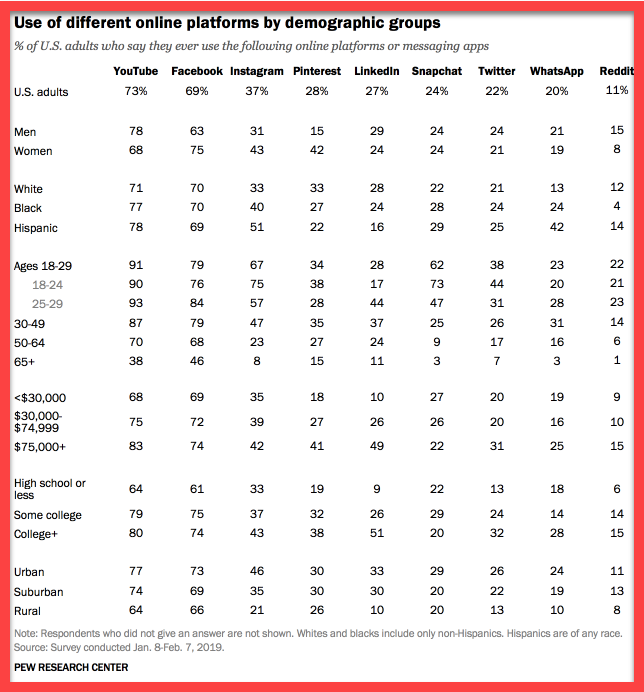
Before planning your social media content strategy, you need to know the top platforms to boost your strategy:
#1. Facebook: Three billion active monthly active
#2. YouTube: More than two billi9n monthly users
#3. Instagram: Two billion active users
#4. TikTok: Over one billion monthly users
#5.Twitter: 237 million daily active users
5. Determine Your Target Audience
Your social media target audience is the group of people you identified that are most likely to be interested in your service/products. You want your content to appeal to these users to increase your sales. You might ask yourself why creating a social media strategy for defining your audience matters. Here are some reasons:
- Focusing on a few specific target groups of social media users allows you to advertise more effectively.
- Targeting an audience means allocating money and resources to relevant consumer groups, which can save so much money.
- Knowing who to target also helps solidify a brand voice that resonates and this amplifies your social media branding efforts.
- When you market to a specific target audience on social media, you can develop messaging that truly resonates with them. This makes it easier to connect with your audience and earn their loyalty.
How To Target Your Audience?
Let’s walk through the social media marketing strategies to see how to target your audience on different platforms.
Create buying personas: A buyer persona is a fictionalized characterization of your best customer(s) based on information about them and how they use your product or service. By looking at your current audience and having access to social media analytics, you can create yours.
Monitor Your Competitors: Your competitors are a good social media strategy example to check what audience they have. Check their profile and social media posts to see who’s responding to them, what’s their engagement rate, and who their top followers are, what hashtags they use, etc. You can also create their buying persona and compare it to yours.
Try Facebook Ads Manager: After defining your target audience, you can conect your social media account to a Facebook business page to reach your audience.
6. Be Consistent
You might have heard “Consistency is the key” many times in your life, and the same applies to social media marketing strategy. All that hard work will go into the drain if you are regularly posted one week than crickets over the next two months.
The content on social media has a short shelf life meaning it becomes useless quickly. If you do not post consistently, chances are your audience will not get much exposure to your brand, and it is much more likely that it won’t make any impact.
On the other hand, do not confuse consistency with redundancy. (Yes! They are different). Posting too much can further become a nuisance for your audience, and they are likely to unfollow or, worse, block you.
Instagram Algorithm
If Instagram is the platform you use for social media advertising marketing strategy, it’s even more important to keep your consistency. In the latest update, Instagram has changed the ranking factors for showing Instagram posts. The more content you share, the Instagram algorithm will put it in front of a wider audience. Also, you have a higher chance to reach the explore page and boost your visibility.
7. Create High-Quality And Winning Content
Sharing content on social media platforms is what attracts users and is the key to win your competitors. In the following we will show some tips for your content creation to include in your social media marketing strategies.
Use Storytelling
Your story needs to be cool, even if your product isn’t. A compelling story can make people interested even in the most boring product on the planet.
Storytelling helps B2B brands connect with their audience on a deeper emotional or psychological level. People make decisions through emotions rather than logic.
According to the research conducted by Google by partnering with Motista and CEB, 50% of B2B buyers make buying decisions when they are emotionally connected with your brand.
Get Interesting
We often hear marketers saying this industry is so boring. But the truth is no industry is boring, just the boring marketers who are not passionate about what they are doing.
People scroll mindlessly on social media and stop only when something catches their eye. Humor is seriously underutilized in B2B. Everyone loves to laugh, that that’s right, B2B marketers.
Get Personal
Many times, b2b content is seen as cold or uninteresting. Creating a personal tone of voice helps you stand out from the noise. Whenever you are crafting messages, always think about the business’s people, rather than talking to the company themselves. Your tone should come off as authentic and have a personal touch.
8. Video Marketing Is The Future.
Well, a one-minute video is worth 1.8 million words. Videos get 55% more engagement than static text and pictures on Instagram.
Consumers can process videos 60,000 times faster than text and evoke long-term memory. Hence, they will be more likely to remember you after watching your videos than just reading text and seeing pictures.
Moreover, YouTube is the largest video hosting platform in the world for a reason. There are different types of video content on Instagram:
Feed Posts: Feed posts can be shared the same way images are posted. These videos can be up to one minute long.
Stories: 15-second videos that will disappear after 24 hours. There are many cool features on stories to share creative posts such as Instagram Q&As, add music to Instagram stories, Instagram polls, swipe-up links, etc. If a story receives high engagement, you can highlight it on your profile.
IGTV videos: They are similar to feed videos buy can be up to 60 minutes long. Also, they have a special tab on your profile and are perfect for creating IGTV Series.
Instagram Reels: A copycat of TikTok videos that allows you to create fun videos set to a soundtrack.
Instagram Lives: Instagram Live lets users video stream directly to their audience’s feeds.
9. Know When To Post And Schedule Accordingly
There is no fixed posting time for social media, as no one size fits for all. Posting content at the right time of the day increases the digital engagement rate.
Most social media platforms show your post only to a small number of followers before spreading it out to other followers. You can use analytics tools such as Hootsuite and HubSpot social, to know the best time for posting. The analytics helps you see when the majority of your audience is online to time your post accordingly.
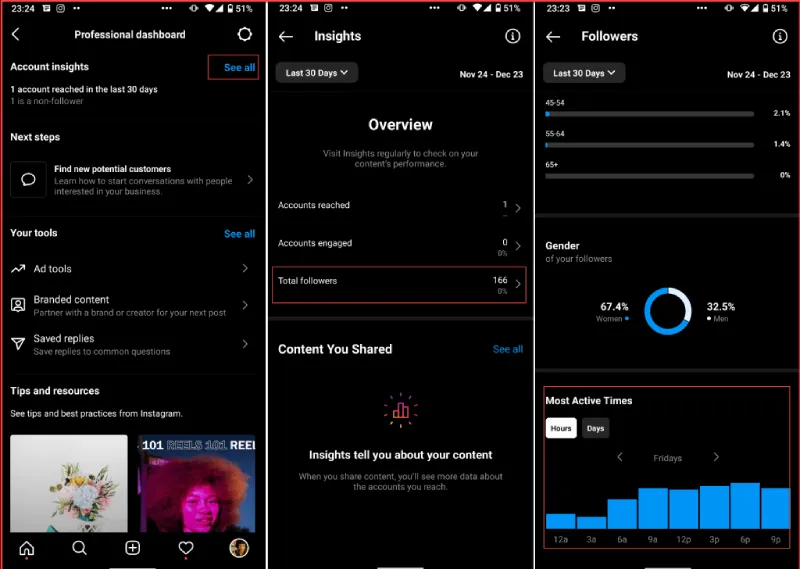
For professional accounts, Instagram allows you to find the best hours that most of your audience is active. Here is where to find it:
- Log into your Instagram account and go to your profile.
- Tap the “Professional Dashboard” button.
- On the “Account insights” section, tap “See all.”
- Select “Total followers.”
- Scroll down and view your “Most active times.”
10. Retarget With Paid Social Media Ads
Social media companies are businesses and want you to shell out money for a broad reach. The organic reach of most social media channels is low. Paid ads provide an excellent opportunity to retarget the audience who interacted with your brands or post and get them interested in more. This social media content strategy will put your posts in front of your targeted audience to boost your reach.
How To Run Instagram Ads?
For professional Instagrammers, running paid ads is one of the best social media strategies to reach your niche audience. This feature was added to Instagram in 2015 and now it’s available for different content types. Here is how you can run Instagram ads:
- Story Ads: This type of ads will appear between users’ stories in full screen. n include call-to-actions in swipe-up link format.
- Explore Ads: These ads only display after someone opens a photo/video on their explore.
- Collection Ads: When a user clicks on an item within a collection, Instagram redirects them to Instant Experience, an e-commerce storefront within the app.
- Shopping Ads: With this feature, you can promote shoppable posts as ads.
How To Run Facebook Ads?
Facebook ads work similarly to Instagram ones and even allow you to cross-promote your advertisement posts on both platforms. But on Facebook, you can access ad objectives and better targeting options. On Facebook ads manager, you can target users by “Locations,” “Gender,” “Age,” “Language,” and “Interests.” After that you can choose your objective for advanced targeting. Here are the common objectives:
- Awareness: Shows your post to people who are most likely to remember them
- Traffic: Send social media users to other platforms such as your website, app, etc.
- Engagement: Receive more messages, video views, post engagement, page likes, and event responses.
- Leads: Collect leads for your business or brand.
- App promotion: This helps you to find new people to install your app and continue using it.
- Sales: Find people likely to purchase your product or service.
11. Analyze, Refine
Finally, after creating and executing your social media strategy, it’s time to analyze the results. Did you reach your KPIs? Did the strategy generate leads for your business?It is great about social media that nothing is set in stone; it is continuously changing. You can always optimize your strategies and post after it is posted.
You can analyze your KPIs by looking at the conversion rates, likes, shares, reach, and comments. Discard the ones with lower conversions or tweak them to make them work. After evaluating these metrics, you should use conversion optimization strategies to refine them.
How To Track Your Performance On Instagram?
Instagram allows professional accounts(business and creator) to access insights of their posts,stories, and account. You can see how much interaction each post receives, see your top posts, check profile viewers, and your audience better. Except your insights, there are other factors to keep your eyes on:
Engagement Rate: This measurement shows the percentage of your followers that interact with your content. Use the following calculation to measure your engagement rate: Engagement Rate: (Likes+Comments)/Followers*100.
Growth Rate: Instagram follower growth rate is a metric showing how quickly your account gains or loses followers.
“Monthly Follow Growth Rate = (Followers on the last day of a month – Followers on the first day of a month) divided by Followers on the first day of the month *100.
Reach and Reach Rate: The number of people who have seen your content.
How Do You Find These Professionals And Executives Using LinkedIn?
If you are using LinkedIn for marketing and looking for creating a social media strategy to automate your growth, this is what you need.
You can use LeadConnect. This tool helps in finding and generating for your business on autopilot. Furthermore, it also enables you to set up personalized follow-up messages and sync your contacts with HubSpot CRM.
If you want to go further than that, use LinkedFusion-a cloud-based automation solution- for your generating business leads even when you are asleep.
Instagram is the 5th most used platform for B2B social media marketing. But don’t let these statistics discourage you. Less usage of Instagram by B2B brands means less competition. There is no better time than now to grab this golden opportunity.
Use the services like Aigrow, Instagram marketing, to increase your ROI, grow your brand, and generate leads.
[ Related: Instagram SEO: Best tactics to boost your exposure ]
Shopify or Shopify alternatives are the best examples of using Instagram for their social media marketing campaigns.
Conclusion
Times have changed. With almost half the world population on social media, it is an excellent opportunity for B2B brands to capture attention by having a well-documented social media marketing strategy.
These strategies will help you boost sales, lead, and ensure your company’s success for years to come.
FAQs:
What Are Some Social Media Strategies?
Here are some of the best example of social media strategy you can try on every platform:
- Run social media campaigns
- Work with influencers and brands
- Optimize your content
- Be active and share content regularly
- Try different types of video content
- Monitor your performance
- Define your marketing goals
