

Influencer marketing is a powerful source of generating revenue, especially when targeting millennials and Gen Z. According to studies, 50% of millennials trust influencer recommendations, even though this figure drops to 38% when these recommendations come from major celebrities.
This is another reason why over half of the brands prefer working with micro-influencers rather than attracting celebrities to their ad campaigns, as we can see in influencer marketing examples. Influencer marketing strategies capitalize on the authentic connections and relatable content that micro-influencers can provide, resulting in higher engagement rates and more genuine brand interactions.
On the other hand, a lot depends on the brand’s creativity and the campaign’s message — often, appealing to local celebrities can do wonders, too; and, if the message is solid, influencer campaigns can be very successful in the B2B industry, too — as seen from the influencer marketing examples below.
Influencer Marketing Examples in 2024
Influencer marketing is a power to be reckoned with. Millennials already account for a quarter of the total US population. Late Zoomers, too, are already entering the high stage of their buying and decision-making potential. And even though influencer marketing trends fluctuate over time (as all trends do), it’s still very probable that harnessing the power of social proof will not lose its marketing viability any time soon.
Let’s take a look at some of the most successful influencer marketing examples to gain a better understanding of this subject:
#1 Maybelline BraveTogether Campaign
A company with over a century-old history, Maybelline Cosmetics knows perfectly well how to address different generations of consumers. With its #BraveTogether campaign, the brand is openly talking about psychological issues such as anxiety and depression.
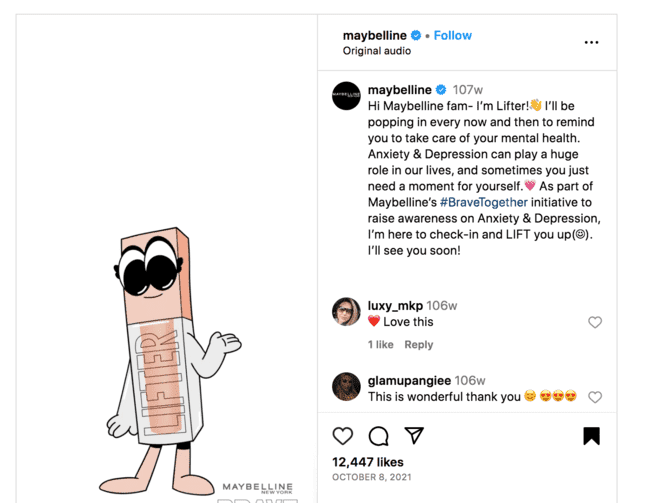
Maybelline’s cartoon character, symbolically called Lifter, has been popping up on the brand’s official Instagram channel for weeks. The idea was to raise awareness about mental health, which generated quite a lot of buzz. It was met well by the Instagram Zoomer audience, especially considering that Maybelline’s official spokesperson is an American actress, Storm Reid, with over 1.6 million followers, 80% of whom are young women aged 18-24.
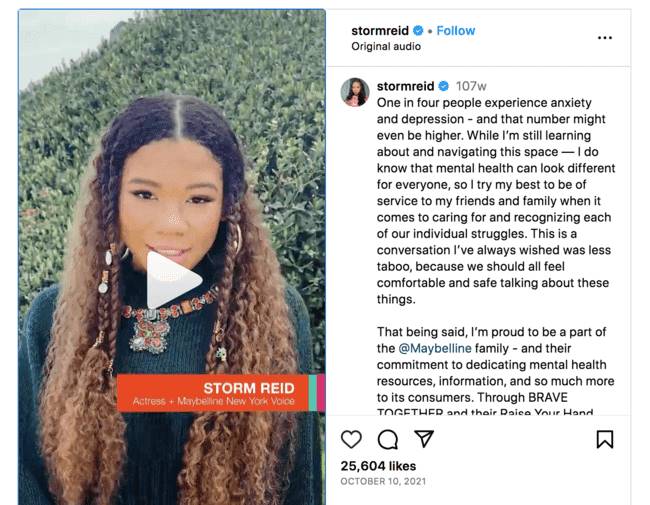
Each post by Storm Reid has a TrueReach of more than 700 thousand views. Still, Maybelline’s #BraveTogether campaign is not just about reaching crowds. The main idea is to harness the reputation of a brand that openly talks about problematic mental issues — a bold move for a cosmetics industry regularly blamed for objectifying women.
This Instagram marketing approach helps build trust with new generations of consumers while spreading the message that Maybelline cares about more than profit.
Also Read: Top Instagram Marketing Tools
#2 HelloFresh ReFresh & Steady Creative Effort
Meal-kit company HelloFresh, founded in Berlin in 2011, quickly became a worldwide food delivery provider, with a million monthly global kit deliveries just three years after manually hand-serving its first ten customers. Such resounding success mainly depends on the brand’s regular collaboration with influencers — in each new country they target.
For example, in 2019, when HelloFresh was looking to expand in the UK, the brand chose Davina McCall as the face of its Refresh program. The campaign, with a chief UK TV person at the forefront, was massively advertised across various social media channels, including the HelloFresh official website.
The main idea behind the ReFresh campaign was to reach busy moms and professionals by offering them different meal kits every day, custom-made from natural ingredients and neatly packed in recyclable packaging.
This same campaign was also actively supported by Instagram influencers — slightly less than 500 influencer posts have generated 5.5 million impressions, while the user-generated #HelloFreshPics hashtag was mentioned in 260,000 more Instagram posts. The following year, the aspiring brand won the 2020 Influencer Marketing Awards for Best Food and Drink Campaign for these efforts.
But HelloFresh does not stop there. The company bets on regular influencer collaboration, even when they are not running a specific campaign. And the brand achieves success by teaming up with young creatives all over the world. One of the top creative influencers who have been working along HelloFresh is a US-based music artist, Malinda, with over 1.5 million subscribers on YouTube.

Malinda’s cover of a British sea shanty Wellerman, along with a humorous and creative verse about HelloFresh at the end of the original song, has already generated 151,000 likes (and growing) and even more views.
Bonus: B2B Influencer Marketing Examples
Influencer marketing is usually associated with one influencer promoting a brand, but there are also B2B influencer marketing examples of large-scale B2B collaboration.
For example, a few years back, Microsoft decided to promote STEM careers to women (a good call for a new generation of young students) and teamed up with National Geographic to highlight women scientists all over the globe.
The result was an astonishing reach to over 90 million people worldwide, with 3.5 million likes generated daily — chiefly through the NatGeo Instagram account.

On a smaller scale, B2B influencer partnerships happen all the time, with brands leveraging the power of LinkedIn lookup to team up with other businesses in adjacent (but not competitive) industries. These partnerships are not just about reaching LinkedInfluencers — often, it is about figuring out your business’s and your potential customers’ needs.
So, in 2020, at the peak of the COVID-19 pandemic, Monday.com, a CRM software company, has teamed up with the Zen media team to spread educational material about supporting remote teams and ensuring people working from home can stay productive. The posts were published across multiple social media channels, including Monday’s official website.
As a result, the campaign generated almost 20 million views and over 300,000 social media organic impressions. At the same time, the initiative helped Monday strengthen its reputation as a chief service for team productivity. So, this is another example of how a campaign message, when timed right, can strengthen the brand’s reputation.
FAQs
After exploring these diverse influencer marketing examples, it’s evident that leveraging the authenticity and reach of influencers across various platforms is crucial for brand success in 2024. Now, it’s time to answer some common questions:
Q1. What Is Influencer Marketing?
Influencer marketing is a strategy where brands partner with individuals who have a large online following (influencers) to promote their products or services to their audience on social media platforms. It’s a more authentic way to reach consumers through trusted personalities.
Q2. How Do I Join Influencer Marketing?
- Choose your niche.
- Build a strong social media presence.
- Engage and grow your audience.
- Develop a cohesive personal brand.
- Reach out to brands or use influencer marketing platforms.
- Negotiate partnerships and terms.
- Disclose sponsored content transparently.
- Track and analyze campaign performance.
- Stay authentic by promoting products you believe in.
- Keep learning and adapting to industry trends.
Takeaway: Influencer Marketing Stats by Platform
As you probably noticed, Instagram is the most popular platform for influencer posts, and for a good reason. In 2021 alone, the number of Instagram posts hashtagged as #ad reached 3.8 million. However, the industry keeps growing. Based on the data from State of Influencer Marketing 2023: Benchmark Report, influencer marketing estimated worth saw a 29% increase compared to 2022. Today, the industry officially stands at $21.1 billion instead of $16.4 billion as of last year.
Instagram’s share in this is 72%, followed by TikTok (61%), YouTube (58%), and Facebook (57%). The main reason why Instagram takes the lead is because this social platform generates the most ROI compared to other channels. Instagram is primarily popular with Zoomers, a third of whom have already made purchase decisions based on influencer recommendations — and that, considering that only late Zoomers have financial independence today.
On the other hand, the examples of successful influencer marketing campaigns described above prove that brands should focus on more than one platform. Generally, a truly successful campaign should be run on multiple platforms, including the brand’s official website. And, while brands generate the most ROI on Instagram, influencer content has the most reach and engagement on TikTok — so it makes sense to use these two together to harness the full power of reach and ROI.
Also, anyone who considers investing in influencer marketing should act fast. Today, an average sponsored post from an influencer with over a million user following base costs brands around $1,200. However, many more brands are embracing influencer marketing today, so the budgets and the ROIs may start fluctuating soon enough.
