

In today’s digital age, social media marketing has become an essential component of a successful business strategy. With the rise of social media platforms, businesses have more opportunities than ever to connect with their target audience. However, it can be challenging to measure the impact of social media marketing on a business’s bottom line.
This is where web analytics comes in. Web analytics is the practice of analyzing website data to understand user behavior, which will help to make the right decisions. In this article, we will explore how web analytics can help businesses measure the impact of social media marketing.
What Is Web Analytics?
The purpose of Web Analytics is to analyze your website’s data to understand how you can improve the user experience. By tracking things like page views, time on site, and bounce rate, you can get a better understanding of you website performance. Additionally, web analytics can help you track your marketing campaigns to see how effectively they drive traffic to your site.
Setting Up Social Media Goals And Objectives
Setting up social media goals and objectives is essential for any business or organization. By having a clear understanding of what you want to achieve, you can create the right content and strategies. That will help you reach your target consumers.
For example, according to your business niche, you may want to hire Instagram marketing services. Additionally, identifying your goals and objectives will make it easier to measure the success of your social media campaigns.
How Can You Use Web Analytics To Measure Social Media Marketing’s Impact?
To measure the impact of social media marketing using web analytics, you can follow these steps:
Define your goals
The first thing you need to do is define your goals for your social media marketing campaign. It doesn’t matter whether you want to increase brand awareness, influence marketing, drive website traffic, generate leads, or increase sales. With clear goals, you can leverage influence marketing and can partner with influence marketers.
Set up tracking
Set up tracking tools such as Google Analytics on your website and social media accounts. This will help you track website traffic, social media engagement, and conversions.
Analyze website traffic
Analyze the website traffic coming from social media channels. You can use Google Analytics to track the number of visitors, their behavior, and their traffic source. This will help you understand which social media channels are driving the most traffic to your website.
Monitor social media engagement
Monitor social media engagement by tracking the number of likes, shares, comments, and followers on your social media accounts. This will help you understand which social media channels are most popular with your target audience.
Measure conversions
Measure conversions by tracking the number of leads, sales, or other desired actions taken by visitors who arrive on your website via social media. To measure social media marketing success, set up conversion tracking with Google Analytics or another tool.
Compare data
Analyze your social media marketing data with data from other marketing channels to determine the impact.
Using web analytics, you can measure social media marketing’s impact on website traffic, engagement, and conversions. With this information, you can make data-driven decisions about your social media marketing strategy.
What Is The Difference Between Web Analytics And Social Media Analytics?
Web analytics and social media analytics are two different types of analytics that measure different aspects of online activity.
Web analytics measures the performance of a website or a web-based application. It provides insights into the behavior of website visitors, such as how they arrived at the site, which pages they viewed etc. Using web analytics tools such as Google Analytics, businesses can understand how well their website is performing and identify areas for improvement.
Social media analytics, on the other hand, measures the performance of social media platforms. It provides insights into how users interact with social media content, such as how many people are seeing posts. So that you can create engaging social media videos or content for your marketing.
Social media analytics tools, such as Facebook Insights and Twitter Analytics, track this data and provide reports to help businesses understand how well their social media efforts are performing and identify areas for improvement.
In summary, web analytics measures the performance of a website or web-based application, while social media analytics measures the performance of social media platforms. Both types of analytics are important for businesses to understand how well their online efforts are performing and to make data-driven decisions to optimize their strategies.
Adjusting Social Media Strategy Based On Insights Gained From Analytics Data
Adjusting your social media strategy based on insights gained from analytics data can help you improve your overall social media performance and achieve your marketing goals. Here are some steps you can take to adjust your social media strategy based on analytics data:
Identify your top-performing content: Use analytics data to identify the types of content that are generating the most engagement and traffic. Adjust your content strategy to focus on creating more of this type of content.
Analyze engagement metrics: Analyze metrics such as likes, shares, and comments to understand what types of content are resonating with your audience. Use this information to create more engaging content that is likely to be shared and generate more traffic.
Refine your targeting: Use analytics data to understand your audience’s demographics and adjust your targeting accordingly. This can help you reach more of the right people and generate better results.
Test different strategies: Use analytics data to test different posting times, content formats, and advertising strategies. Analyze the results to determine what works best for your audience and adjust your social media strategy accordingly.
Monitor follower growth: Monitor your follower growth over time to understand which social media platforms are attracting new followers and which are not. Adjust your social media strategy accordingly to focus on the platforms that are driving the most growth.
Set goals and track progress: Set goals for your social media strategy and use analytics data to track progress towards these goals. Adjust your strategy as needed to ensure that you are on track to achieve your goals. Also, you can use influencer marketing as your business strategy. Best Free Influencer Marketing Platforms in 2023 would be a great hand for your business strategy.
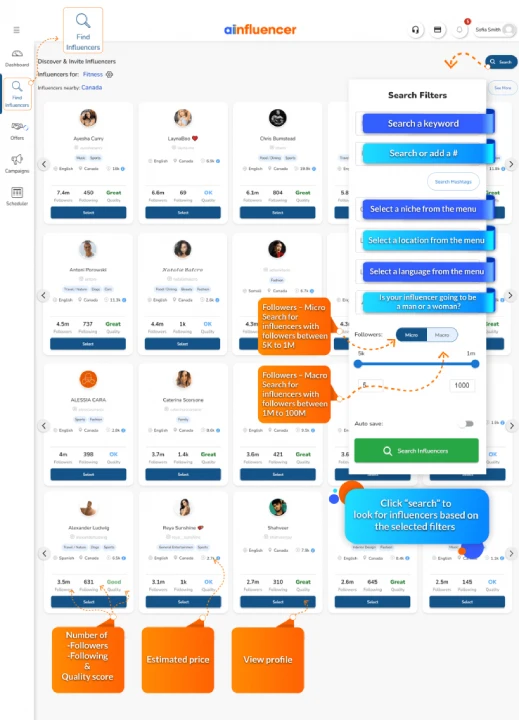
Ainfluencer is a free influencer marketplace that can help you find and collaborate with influencers in different niches. If you are looking for a way to take your influencer marketing strategies to the next level and access thousands of qualified influencers to partner with, use Ainfluencer’s AI-powered search engine to filter your search based on location, hashtag, category, language, etc.
Setting Smart (Specific, Measurable, Achievable, Relevant, Time-Bound) Goals For Social Media Marketing
Setting SMART goals for social media marketing is a great way to ensure that your efforts are focused, measurable, and effective. Here’s how to create SMART goals for social media marketing:
- Specific: Your goal should be specific and clearly defined. Avoid vague statements like “increase engagement.” Instead, set specific goals such as “increase Instagram followers engagement by 20% over the next three months.”
- Measurable: Your goal should be measurable so that you can track progress and determine whether you have achieved it. Use metrics such as likes, shares, comments, and followers to measure success.
- Achievable: Your goal should be achievable and realistic. Don’t set unrealistic targets that are beyond your reach. Instead, set goals that challenge you but are still achievable.
- Relevant: Your goal should be relevant to your business objectives and align with your overall marketing strategy. Only set goals that are relevant to your business.
- Time-bound: Your goal should have a specific timeframe for completion. This will help you stay focused and on track. For example, “increase Twitter followers by 10% in the next 90 days.”
Social media tools for influencers can also help you grow your social media business. You can also use shortcut techniques like acquiring likes, comments, and followers from a reliable source like Socialgreg. It is a reliable and trustworthy platform that can help you to grow your business on social media and bring more visitors. There are coupon codes available on the platform to help you save money. Try SocialGreg to boost your social media marketing.
Optimizing Social Media Strategy Based on Analytics Data
Optimizing your social media strategy based on analytics data is crucial to ensure that your efforts are effective and generate the desired results. Here are some steps to help you optimize your social media strategy based on analytics data:
Review your analytics data
Review your analytics data regularly to understand which social media platforms are driving the most traffic, engagement, and conversions for your business.
Identify top-performing content
Use analytics data to identify your top-performing content, including posts, videos, and other content formats. Analyze what makes them successful and use these insights to create similar content in the future.
Analyze engagement metrics
Analyze engagement metrics such as likes, comments, and shares to understand what types of content resonate best with your audience. Use this information to adjust your content strategy and create content that is more likely to engage your audience.
Monitor follower growth
Monitor your follower growth over time to understand which social media platforms are attracting new followers and which are not. Adjust your social media strategy accordingly to focus on the platforms that are driving the most growth.
Test different strategies
Use analytics data to test different strategies, such as posting at different times or using different types of content. Analyze the results to determine what works best for your audience and adjust your social media strategy accordingly.
Refine your targeting
Use analytics data to refine your targeting by understanding your audience’s demographics and targeting your content and advertising accordingly.
Regularly reviewing your analytics data and adjusting your social media strategy based on insights can optimize your social media marketing efforts and achieve better results.
Why Web Analytics is Your Key to Grow Your Business?
In the age of social media, it’s more important than ever to have a handle on your web analytics. Web analytics can help you track your social media activity, measure your reach and engagement, and understand what’s working and what’s not.
Web analytics are important for understanding how your website is being used and how you can improve your website to meet your users’ needs. By tracking data such as page views, unique visitors, and bounce rate, you can better understand what users are doing on your site and how you can improve your site to meet their needs better.
Without web analytics, you’re flying blind when it comes to social media. You will know how many people see your content, how often they interact with it, or what kind of impact it’s having. Web analytics can help you understand all of that and more.
Additionally, web analytics can help you identify which marketing campaigns are driving traffic to your site and which ones are not performing well, so you can adjust your marketing efforts accordingly.
So if you’re looking to tame the social media beast, web analytics is your best friend. With its help, you can make sure your social media efforts are paying off and adjust your strategy accordingly. Besides, you can try a platform like SocialWick to grow your social media marketing and bring visitors to your website. SocialWick offers coupon codes to get discounts on buying organic likes, comments, and followers on social media.
Conclusion
Web analytics is a powerful tool that can be used to measure the impact of social media marketing. By analyzing data from social media platforms alongside data from website analytics tools, businesses can gain a deeper understanding of how social media is contributing to their overall marketing efforts.
Additionally, web analytics can help businesses track the effectiveness of specific social media campaigns and strategies and make informed decisions about where to allocate their resources in the future. This information allows businesses to fine-tune their social media strategies for better brand engagement, more traffic, and achieving marketing goals. By using web analytics to measure social media marketing’s impact, businesses can make data-driven decisions to ensure that their social media efforts are effective and deliver a strong return on investment.
 Summarize this article with:





